Simplifying complex network data collection.
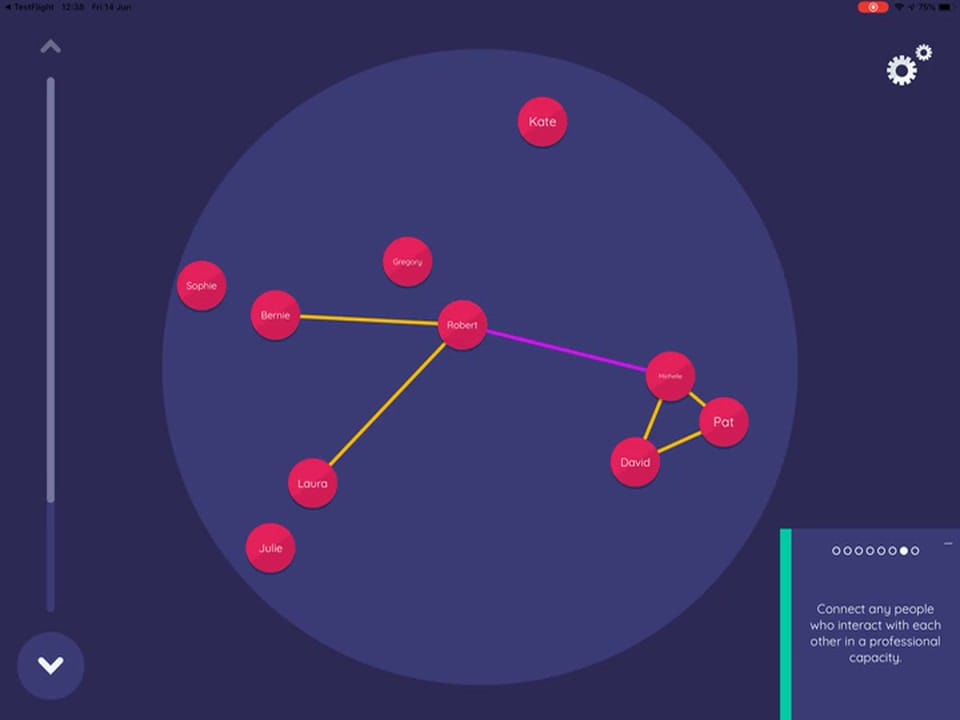
Network Canvas provides free and open-source software for surveying networks, designed around the needs of both researchers and their participants.
Social Network Influence in Public Health and How to Map It [Full story]
Network Canvas wins INSNA Award [Full story]
or keep scrolling to learn more
A selection of tools to facilitate your research
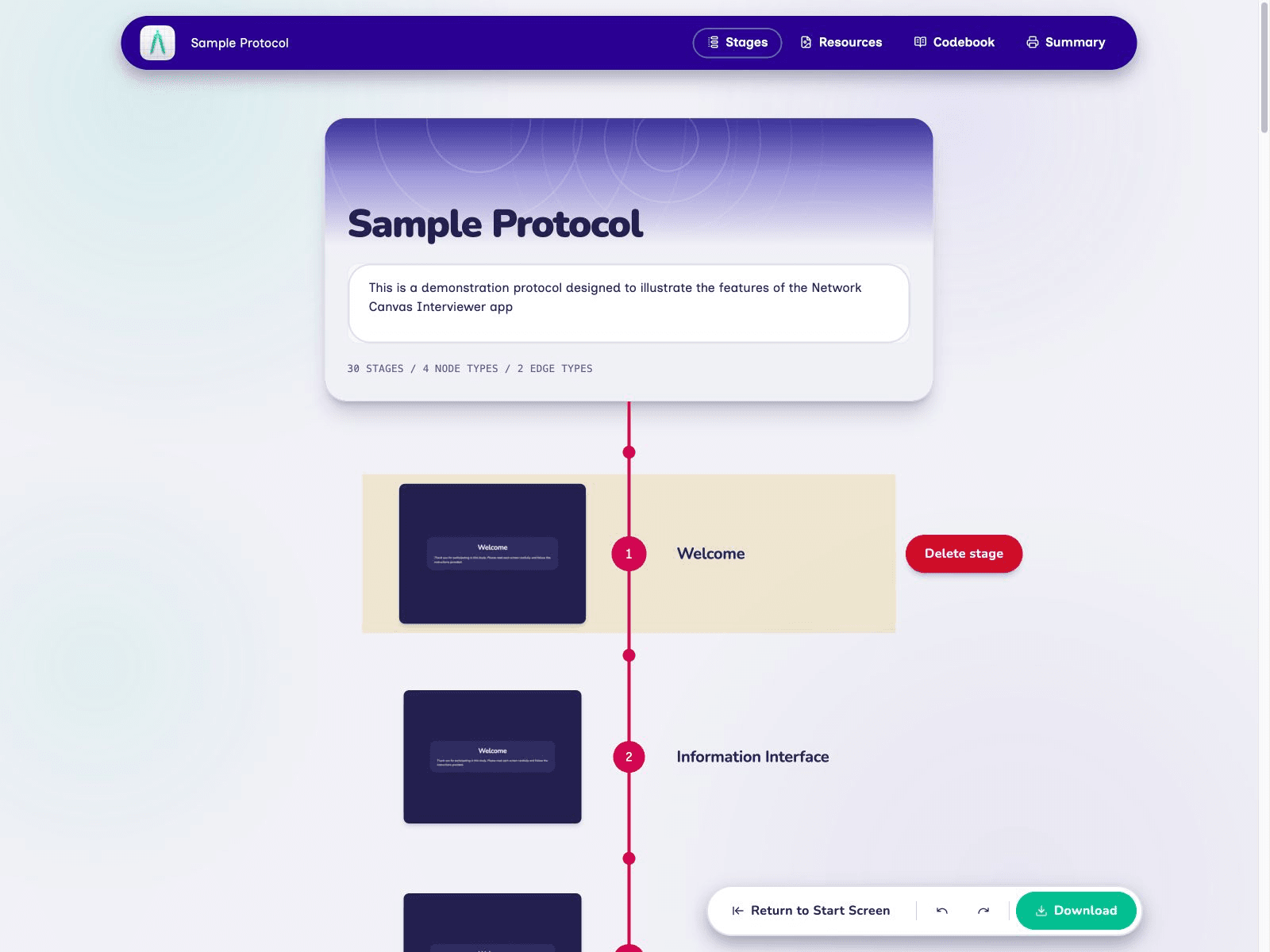
Architect
A browser-based tool for visually designing Network Canvas interviews. Architect allows subject experts to focus on the design and implementation of their study, without needing to learn complex new technology.
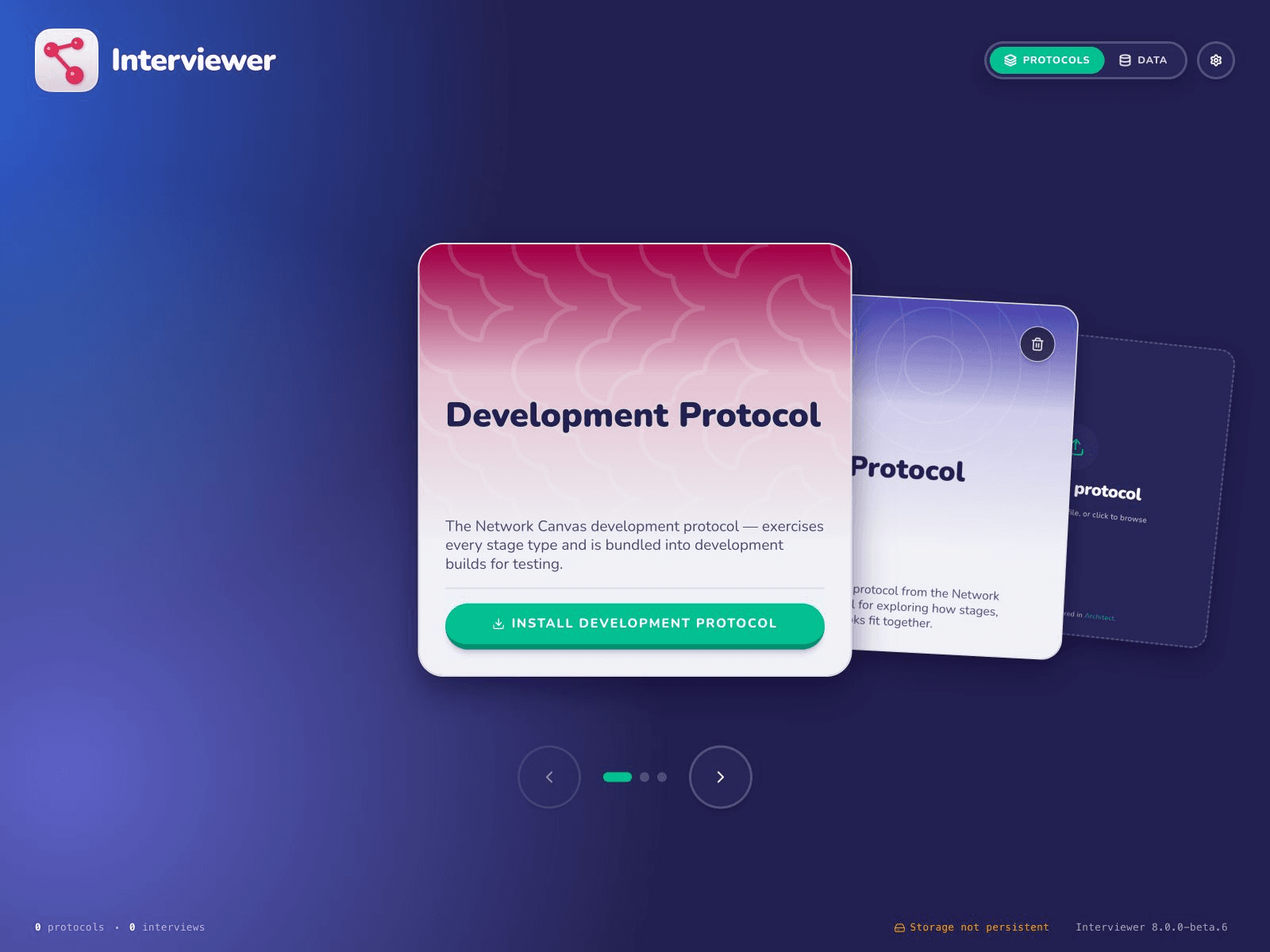
Interviewer
A browser-based app for administering Network Canvas interviews in the field. Interviewer provides minimalist, participant-centric interfaces for all the data collection tasks associated with personal network interviewing.
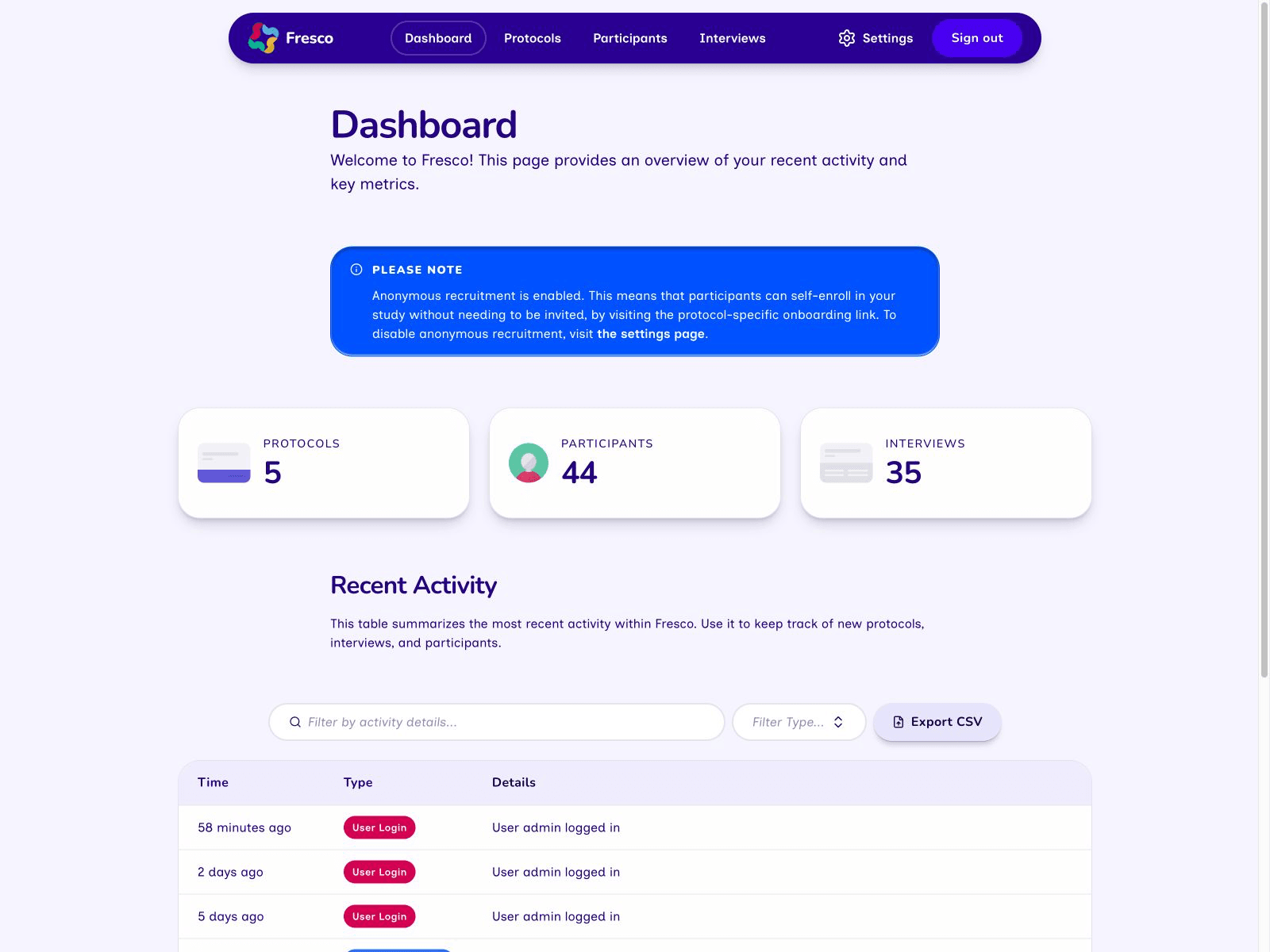
Fresco
Bringing Network Canvas interviews to the web! Fresco is a pilot project that allows researchers to conduct Network Canvas interviews in a web browser.
Learn more
Design Principles
Underpinning all Network Canvas software is a set of five design principles. These principles are derived from our observations and experiences regarding the problems facing researchers wishing to design and conduct personal networks research.
Ontological flexibility
The software is designed with fundamental ontological flexibility. Simply put, this means that we do not presuppose anything about the nature of your interview.
Researchers are free to define the nodes and edges of their interviews, their attributes, the sequence of data collection tasks, as well as the way these tasks are explained to the participant.
In-person and interviewer-assisted
We believe that the presence of a trained interviewer who can facilitate the data collection task enables the collection of higher quality data.
The Network Canvas tools are therefore designed on the assumption that interviews occur in the presence of an interviewer, on an interviewer-controlled machine, and with the interviewer having been specifically trained in guiding the interview process.
An emphasis on design
Our software has been designed from the ground up to be as visually engaging and low burden as possible for participants.
We take design extremely seriously, and have drawn on HCI literature, as well as papers from the network analysis community, to create an interview experience that is simple for participants to understand, with clear, consistent, and tactile interactions guiding the data collection.
End-to-end workflow
Simplifying the process of collecting complex structural data requires not just an interview tool, but also a tool for designing these interviews. Together, these tools provide an end-to-end workflow which lowers the costs (both material and technical) of collecting network data.
Importantly, our tools do not require a high degree of technical knowledge to operate. Rather, they allow researchers to focus on using their subject expertise to design an effective interview experience.
Open-source community driven development
Key to sustaining this effort is input and collaboration with the community, both inside and outside of academia. For this reason, the network canvas tools are free to use and completely open-source (licensed under the GPL version 3).
We have implemented a community driven development program, and are eager to encourage feature development or other contributions from any interested third parties.
Grants Using Network Canvas

Recent Publications Using Network Canvas
The following are the eight most recent publications utilizing Network Canvas. For guidance on citing Network Canvas, see our documentation article.
If you would like to feature your publication, please let us know by posting in our community site thread.
Core Team

Kate Banner
Northwestern University
Michelle Birkett
Northwestern University

Caden Buckhalt
Northwestern University

Noshir Contractor
Northwestern University

Bernie Hogan
University of Oxford

Patrick Janulis
Northwestern University

Joshua Melville
Northwestern University

Gregory Phillips II
Northwestern University
Scientific Advisors
jimi adams, Rich D'Aquilla, Mike Bass, Martin Everett, Abel Kho, Carl Latkin, Brian Mustanski
Institutions
The software is being developed by a team of researchers and developers based at Northwestern University and the University of Oxford, as well as several external contracted developers. We are grateful for the prior and ongoing funding from the National Institutes of Health that make this work possible.
The intellectual property and copyright associated with the software is controlled by a registered not-for-profit, the Complex Data Collective, comprising the core project staff.

What next?
Want to learn more?
We have created extensive documentation, covering all aspects of creating, deploying, and managing a study using Network Canvas.
Visit Documentation Site
Looking for help?
We have also recently launched a community website, where you can ask questions, report bugs, share your work, and get help from other researchers.
Visit Community Website
Keep in touch
If you would like to stay in touch with the project, and find out about events and releases as soon as they happen, we encourage you to join our mailing list, and to follow us on Twitter. We are considerate email partners, and will only ever use this list for important announcements.

Want to collaborate?
If you are interested in a formal academic or consultancy-based collaboration, please see our documentation article on the subject. Unfortunately, we're unable to offer unpaid consultancies due to limited bandwidth of a small team.
Explore Collaboration Options